Boost Training with Hydrogen Water in 8 Days
Hydrogen Water, Muscle Recovery, Endurance Training, Fatigue Reduction
8 Days of Hydrogen Water: Can It Improve Resistance Training Results?
Curious whether hydrogen-rich water can actually help you push harder in the gym, bounce back faster, and feel less wiped out after tough sessions? Let’s walk through what the latest science says about 8 days of hydrogen water, muscle recovery, endurance, and fatigue—broken down in a friendly, practical way you can actually use.
What Exactly Is Hydrogen Water—and Why Are Lifters Talking About It?
Hydrogen water, also called hydrogen-rich water (HRW), is simply regular water that has been infused with extra molecular hydrogen gas (H2). That’s it—no magic blue glow, no strange taste. It looks and feels like normal water, but it carries dissolved hydrogen that may act as a selective antioxidant in your body.
Why does this matter for muscle recovery and endurance training? Intense exercise generates a lot of oxidative stress—a buildup of reactive oxygen species (ROS) that can damage cells, contribute to muscle soreness, and increase fatigue. The idea is that hydrogen water might help neutralize some of this excess oxidative stress without shutting down the normal training adaptations your body needs to get stronger and fitter.
💡 Friendly takeaway: Think of hydrogen water as regular water with a possible “recovery assist” built in, especially for hard training blocks.
The Science Snapshot: What Do Clinical Studies Actually Show?
Before we zoom in on an 8-day supplementation window, it helps to look at the broader research on hydrogen water, fatigue reduction, and performance enhancement. Over the last few years, several human and animal studies have explored how hydrogen-rich water affects exercise, recovery, and endurance.
In elite fin swimmers, 4 days of hydrogen water (about 1.2–2.5 liters per day) reduced muscle damage markers like creatine kinase (CK), eased soreness, and slightly improved countermovement jump performance 12 hours after intense training (PubMed 38681143).
A 2026 finswimming performance trial found that 4 days of hydrogen-rich water improved afternoon 400 m time-trial performance by about 0.6%—a small but meaningful edge at elite levels (PubMed 41991147).
In elite female athletes, 28 days of hydrogen tablets increased muscle mass, reduced fat mass, and improved strength (torque) after intense exercise, while also shifting some antioxidant and inflammatory markers in a favorable direction (PubMed 40376695).
On the animal side, a 2026 study in physically inactive mice showed that at least 4 weeks of hydrogen water significantly improved treadmill endurance, reduced muscle fatigue, and lowered oxidative stress and inflammation (PubMed 41641160).
📌 Key point: Across studies, hydrogen water doesn’t turn people into superheroes—but it consistently shows small, measurable benefits for recovery, endurance, and fatigue in demanding training situations.
Why Focus on 8 Days? Short-Term Supplementation and Training Blocks
Most of the human research so far has used short-term hydrogen water protocols—often around 4 days, sometimes up to 28 days. So where does an 8-day window come in for your resistance training and endurance work?
Think of 8 days as a realistic “mini cycle” that can cover:
A full week of tougher training (for example, 5 lifting sessions plus 2 cardio or conditioning days)
Back-to-back heavy lifting sessions, plus a weekend event like a long hike, race, or tournament
The ramp-up phase of a new program, when soreness and fatigue often spike
Since studies show benefits in as little as 4 days, it’s reasonable to think that an 8-day hydrogen water routine could support both workout recovery and endurance across a demanding week. It gives your body repeated exposure to hydrogen during a time when oxidative stress and fatigue are likely higher than usual.
Hydrogen-Rich Water and Muscle Recovery: What’s Going On Inside Your Muscles?
Let’s connect the dots between hydrogen water and muscle recovery. After a hard lifting session—especially heavy squats, deadlifts, or high-volume leg work—your muscle fibers experience microscopic damage. This triggers inflammation, soreness, and a temporary drop in strength and neuromuscular performance (your ability to recruit and coordinate muscle fibers efficiently).

Heavy lifting creates micro-damage; hydrogen water may help you bounce back a bit faster.
Research in swimmers and elite athletes suggests hydrogen water can:
Lower CK levels, a blood marker of muscle damage, after intense exercise (PubMed 38681143).
Reduce muscle soreness 12 hours after hard sessions, which can make the next day’s training feel more doable.
Help preserve or slightly improve jump performance and strength measures, hinting at better neuromuscular recovery.
These changes line up with hydrogen water’s proposed role in managing oxidative stress and inflammation. By limiting some of the “excess” damage from training, you may feel less beat up and regain strength and power a little sooner—key ingredients for faster recovery.
💬 In plain language: Hydrogen water won’t replace smart programming or sleep, but it might help your muscles feel fresher between tough workouts.
Muscular Endurance and Fatigue Reduction: Can You Actually Last Longer?
Beyond soreness, many people are interested in whether hydrogen water can improve muscular endurance—your ability to repeat efforts, hold a contraction, or keep going in a set without your muscles giving out too soon. This is where both human and animal data get interesting.
In the 2026 mouse study, animals given hydrogen-rich water for at least 4 weeks ran longer on a treadmill and showed less muscle fatigue, with lower markers of oxidative stress and inflammation (PubMed 41641160). While mice aren’t humans, this supports the idea that hydrogen water can enhance endurance capacity at the muscle level.
In humans, several studies and reviews report that hydrogen-rich water:
Reduces exercise-induced oxidative stress, which is closely tied to the onset of fatigue (Physiology & Behavior, 2020).
May improve endurance performance in trained athletes, although the effect size is usually modest.
Has shown fatigue reduction benefits in some settings, including lower lactate buildup and improved heart rate variability in a 2026 pilot trial, even when cycling performance itself didn’t change much.
For your training, this might translate into slightly more reps before failure, better stamina in higher-rep sets, or feeling less drained during circuits or supersets—especially when combined with good nutrition and hydration.
Neuromuscular Performance: Sharper Coordination, Not Just Stronger Muscles
Strength and endurance aren’t just about muscle size. Your neuromuscular performance—how efficiently your nervous system communicates with your muscles—plays a huge role in how powerful and coordinated you feel, especially under fatigue.

Studies link hydrogen water to slightly better jump and strength recovery after hard sessions.
In the fin swimmer study, athletes drinking hydrogen-rich water showed improved countermovement jump height 12 hours after intense training compared with placebo (PubMed 38681143). That kind of jump test is often used as a quick check of neuromuscular readiness: if your jump height tanks, you’re usually not fully recovered.
Similarly, in the 28-day study on elite female athletes, hydrogen-generating tablets improved torque output after intense exercise (PubMed 40376695). Torque is basically a measure of how much rotational force your muscles can produce—think of it as a detailed snapshot of strength performance.
These findings suggest that hydrogen water may help your nervous system and muscles “bounce back in sync,” supporting not just raw strength but also the quality of your movements—how explosive, stable, and controlled they feel after tough training days.
💡 For lifters and athletes: Better neuromuscular performance means your squat, press, or jump can feel snappier, even if you trained hard the day before.
How Hydrogen Water Might Work: Oxidative Stress, Inflammation, and Beyond
So how does a simple change in your water potentially influence fatigue reduction, faster recovery, and performance enhancement? The current research points to a few key mechanisms:
Targeted antioxidant effects. Hydrogen molecules are tiny and can diffuse rapidly into cells and mitochondria. Some studies suggest hydrogen water helps neutralize harmful reactive oxygen species (ROS) generated during intense exercise, easing oxidative stress without completely blocking the beneficial signals your body uses to adapt to training.
Anti-inflammatory pathways. A 2026 mechanistic study highlighted activation of the immunoresponsive gene 1–itaconate/Nrf2/heme oxygenase-1 pathway (PubMed 40580185). In simple terms, hydrogen water may help nudge your body toward a more balanced inflammatory response after stress, which can support recovery and energy levels.
Better lactate handling and circulation. Some research shows that hydrogen water can reduce lactate accumulation and improve heart rate variability during high-intensity efforts, hinting at improved metabolic and cardiovascular responses to exercise.
All of this adds up to a picture where hydrogen water supports your body’s ability to handle training stress—especially repeated bouts—so you can keep showing up with a bit more energy and a bit less lingering fatigue.
8 Days of Hydrogen Water: A Practical Mini-Experiment for Your Training
If you’re curious about hydrogen water for workout recovery and endurance, an 8-day trial during a demanding training block is a simple, low-risk way to see how your body responds. Here’s a friendly, step-by-step approach you can adapt to your schedule.
Step 1: Choose Your Focus Week
Pick 8 days where your training is relatively consistent and moderately to highly challenging. For example:
A strength phase with 4–5 resistance training days, plus 2 conditioning days, or
A deload week where you still train but want to maximize recovery and freshness.
Step 2: Dial In Your Hydrogen Water Intake
Most clinical studies used around 1–2.5 liters of hydrogen-rich water per day. For an 8-day self-test, you might aim for:
1–2 bottles per day (for example, 500–750 ml each), depending on your size and normal water intake.
One bottle 30–60 minutes before training, another in the hours after your workout to support recovery.
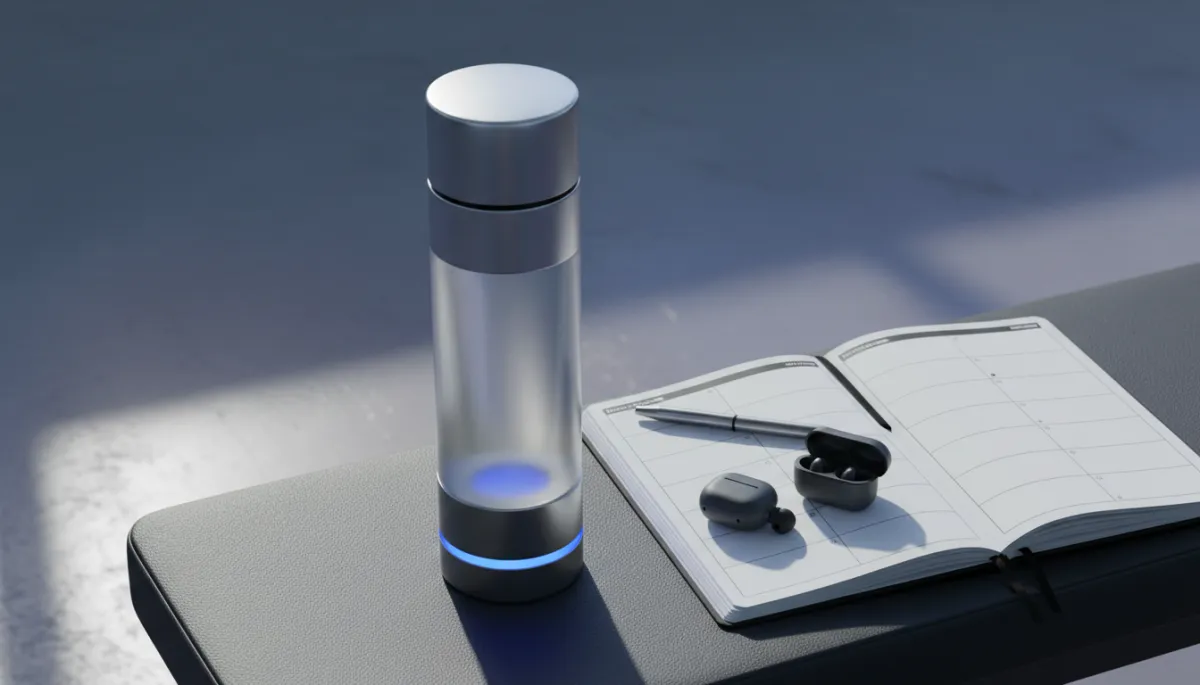
Pair hydrogen water with a consistent training log to notice changes in fatigue and performance.
Step 3: Track Recovery, Endurance, and Fatigue Honestly
To really see if hydrogen water is doing anything for you, keep things simple but consistent:
Rate your muscle soreness each morning on a 1–10 scale.
Note your session energy (how “drained” or “ready” you feel) before each workout.
Track a simple performance marker, like reps at a given weight or a short conditioning test (e.g., how many push-ups or goblet squats you can do in 60 seconds).
You’re not running a lab study here, just giving yourself a clearer sense of whether hydrogen water seems to help your muscle recovery, endurance, and fatigue reduction over those 8 days.
Where Hydrogen Water Fits in Your Bigger Training Picture
It’s important to keep hydrogen water in perspective. The research so far suggests:
Effects are modest—we’re talking small improvements in performance and recovery, not dramatic transformations overnight.
Benefits seem most noticeable in high-intensity or repeated-bout scenarios (like multiple hard sessions or back-to-back competition days).
Some authors have ties to hydrogen water products, and many studies use small sample sizes—so there’s still plenty we don’t know.
📌 Honest summary: Hydrogen water looks promising as a supportive tool for performance enhancement and recovery, not a replacement for the basics: training, sleep, nutrition, and stress management.
Safety, Practical Tips, and Who Might Benefit Most
For most healthy adults, hydrogen-rich water appears to be well tolerated. It’s basically water with extra dissolved hydrogen gas, which your body can safely handle. That said, it’s always wise to talk with your healthcare provider if you have medical conditions or take medications, especially if you’re considering long-term use or higher doses.
People who may notice the most from an 8-day hydrogen water experiment include:
Recreational lifters going through a particularly intense or high-volume phase of resistance training.
Endurance athletes combining strength work with long runs, rides, or swims who want extra help with fatigue reduction.
Busy people training on limited sleep or under higher life stress, where any boost in recovery feels especially valuable.

Hydrogen water may offer small but meaningful support for everyday lifters and endurance enthusiasts.
Putting It All Together: Is Hydrogen Water Worth Trying for 8 Days?
When you pull together the clinical studies, animal research, and emerging mechanistic data, a clear picture starts to form. Hydrogen water:
Supports muscle recovery by reducing markers of muscle damage and soreness after intense training.
Offers modest improvements in muscular endurance and performance, especially in repeated or longer efforts.
Helps with fatigue reduction through effects on oxidative stress, inflammation, and possibly lactate handling and cardiovascular response.
May enhance neuromuscular performance, improving how quickly and powerfully your muscles respond after hard sessions.
An 8-day supplementation period lines up nicely with what we see in the literature: benefits emerging within a few days and continuing across a short training block. While the gains won’t be dramatic, they can be meaningful—especially if you’re stacking small advantages over time.
If you decide to try hydrogen water, treat it as a supportive tool rather than a miracle fix. Keep your training smart, your sleep as solid as possible, and your nutrition dialed in. Then pay attention: Do you feel less sore? A bit more energetic? Able to maintain performance better across the week?
Your individual response matters just as much as the averages in a study. With a simple 8-day experiment, you’ll have your own data to help you decide whether hydrogen-rich water earns a regular place in your recovery and endurance training toolkit.
